
Tags
Anwar Ibrahim, GE16, PH, PKR, PN, Reformasi, UMNO, Zahid Hamidi
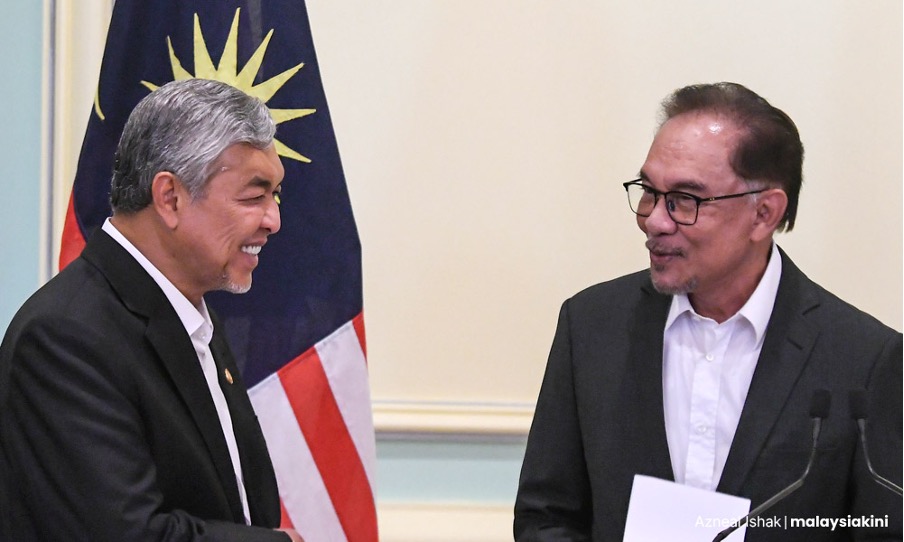
[1] The political tide appears to be turning rapidly against Anwar Ibrahim and the coalition he leads. The clearest warning sign came from Negeri Sembilan, where UMNO moved to precipitate the collapse of the PH-led state government. This was not merely a state-level quarrel but an unmistakable signal that UMNO is preparing to move against Anwar himself.
[2] After spending the past three years as the junior partner in government — and benefiting enormously from the political lifeline Anwar extended when the party was on the brink of collapse — UMNO now appears convinced that it is strong enough to reclaim power on its own terms.
[3] Ironically, despite its deeply corrupt past and near-death experience only a few years ago, UMNO is beginning to look like the only relatively stable national political force left standing. By contrast, both PH and PN appear increasingly weighed down by internal tensions, policy drift and leadership uncertainty.
[4] PKR, in particular, appears to be facing an existential crisis. Support for the party has declined across virtually every major ethnic group. Leaked internal assessments paint a grim picture, with many PKR MPs at serious risk of losing their seats if elections were held today. The situation in PKR today is reminiscent of the disarray in UMNO in the runup to GE14; it does not bode well for the party.
[5] Even more telling is the reported scramble by senior PKR figures for safer seats ––usually in more ethnically mixed constituencies. Having failed to make meaningful inroads into the Malay heartland, the party now appears to be retreating once again to the non-Malay voter base that has long sustained it. This time, however, the ground beneath it looks far less secure.
[6] After years of unmet expectations, broken promises and what many see as an increasingly haughty leadership style, the non-Malay electorate appear to have had enough. The sense of betrayal is palpable, with growing talk of using the ballot box to punish Anwar. Increasingly, he looks less like a transformational leader and more like a one-term prime minister.
[7] At the same time, much of the reformist energy once associated with Anwar appears to be shifting towards Rafizi Ramli, who is increasingly seen as the more credible standard-bearer of reformist hopes. Should he eventually choose to break away or chart an independent political course, it could well deliver the final blow to the current leadership.
[8] DAP, too, may no longer be in a position to rescue Anwar politically. Its setback in Sabah served as a sobering reminder that its support base can no longer be taken for granted. Anthony Loke is increasingly viewed as overly accommodating and too willing to compromise core principles simply to preserve the coalition government. DAP will likely remain the dominant Chinese party for lack of a credible alternative, but growing frustration among voters could still translate into electoral losses.
[9] Nor is Perikatan Nasional especially well positioned to capitalise on the current political situation. Bersatu appears broken beyond repair, with many members quietly exploring political exits and new alignments. PAS, meanwhile, remains constrained by its inability to broaden its appeal beyond its conservative Malay-Muslim core base. PAS may retain its rural strongholds, but major gains in urban and semi-urban constituencies remain unlikely.
[10] All this leaves Zahid Hamidi and UMNO in an extraordinarily advantageous position. If the courts ultimately uphold Zahid’s DNAA — itself widely seen as another major political concession extracted from Anwar — UMNO’s path back to Putrajaya could become even clearer. The party now has every reason to believe that it could emerge from GE16 as the single largest force in Parliament, even if it falls short of an outright majority.
[11] What makes this moment especially remarkable is its profound irony. After decades of presenting himself as the antidote to UMNO’s corruption, arrogance and abuse of power, Anwar Ibrahim may ultimately be remembered as the man who enabled UMNO’s political resurrection. In rescuing UMNO after GE15, he restored its legitimacy, gave it time to rebuild, and in the process may have brought the reformasi era to its final, dismal end.
Dennis Ignatius | Kuala Lumpur | Thursday, 14 May 2026


You must be logged in to post a comment.