
[1] Responding to Anthony Loke’s resignation over the Pardons Board’s recent decision to allow Najib to serve the remainder of his sentence at home on payment of his RM50 million fine, Prime Minister Anwar Ibrahim sounded thoroughly exasperated. Loke, he said, had been performing his duties well and had done nothing wrong; why, then, the need to punish him? “What does this country want?” he asked. “The problem is corruption, theft and misappropriation. You do not raise these (issues). But you raise the issue of asking him to resign. What for?”[1]
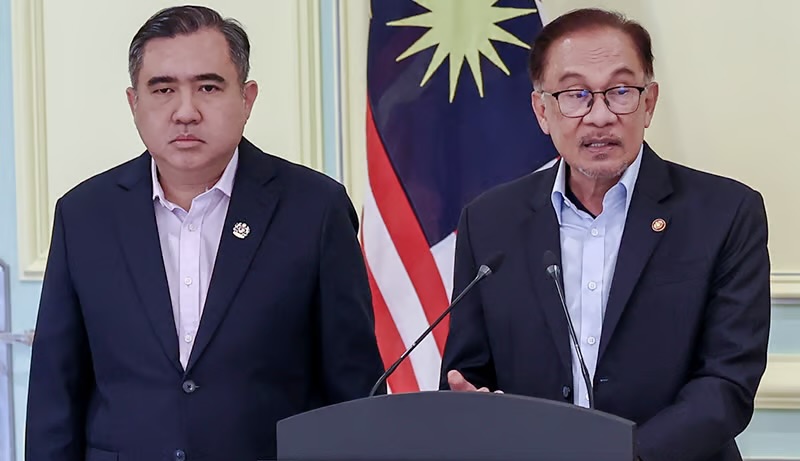
[2] The prime minister appears to be conflating two quite different issues: performance and principle. His take on events is also not quite correct. No one is punishing Loke. His resignation was the DAP’s own decision, a voluntary act of responsibility, not a penalty imposed by critics. To frame it as punishment is to miss the point entirely.
[3] There is no question that Loke has been one of the best-performing ministers in the cabinet. His resignation is certainly a loss to the government and to the country. But performance is not the issue here. Principle is.
[4] The DAP was in the forefront of the fight to bring Najib to justice over the 1MDB scandal, an issue that helped carry the party into government for the first time in its history. Najib’s conviction, after an exhaustive trial, was a vindication of everything it had fought for. Since then, however, driven, it would seem, by political expediency, Anwar, by his own admission in Parliament, pushed for Najib’s pardon petition to be heard by the Pardons Board.[2] This despite Najib never having acknowledged any wrongdoing. Perhaps in an effort to head off clemency for Najib, the DAP turned it into a red line; threats of resignation followed. The outcome crossed that line.
[5] When a political party takes a principled stand, when it draws a line in the sand, it is putting its credibility and its integrity on the line. When that line is crossed, it cannot ignore it. So grave was the matter that the DAP leadership felt it had to respond with more than words. The resignation of the party’s secretary-general from the cabinet – a rare gesture in Malaysian politics – told Anwar and Malaysians that the DAP took this issue very seriously. Some will say a gesture is not enough, and that the DAP should leave the government altogether. Perhaps. But it sent a message that words alone could not. It is not about punishing a good minister; it is about a party keeping faith with the people who trusted it.
[6] Yet Loke was hardly the most obvious person to resign. If principle demanded a resignation, it could be argued that it should have come from the prime minister himself. He, more than any other individual, bears responsibility for this serious setback in the fight against corruption. He made anti-corruption the cornerstone of his domestic agenda, yet he pushed for clemency for a man who has come to epitomise the very corruption he has pledged to eradicate.
[7] Another person who might have considered resigning on principle is Hannah Yeoh. She sat on the board. We do not know what position she took, and she may well have opposed the decision. But if her party felt so strongly that Najib should not be granted clemency, she, as a member of that board, could reasonably have been expected to tender her resignation as a matter of principle. That, too, would have been a great loss; but again, this is not about performance. It is about principle.
[8] Interestingly, in defending Loke, the prime minister invoked the same argument that UMNO members have long used to defend Najib: he contributed so much to the country, so why punish him? Loke is certainly not Najib. But the prime minister should be careful about borrowing the reasoning of Najib’s defenders. Once performance becomes an excuse for setting principle aside, there is no telling where it ends.
[9] The prime minister asks what this country wants. It is not complicated. We want leaders who mean what they say. We want them to act with integrity, to be transparent and accountable, to deal firmly with the corrupt whoever they may be, and to hold themselves to the standards they demand of others. The prime minister needn’t look far for the answer. It is in his own speeches, in the reform agenda that brought him to power, in every promise to fight corruption without fear or favour. What this country wants is for him to keep them.
[Dennis Ignatius | Kuala Lumpur | 03 October 2026]
[1] What does this country want? Anwar questions focus on Loke’s exit over corruption| Malaysiakini |29 Sept 26
[2] Anwar: ‘I submitted Najib’s royal pardon application for consideration’ |NST | 10 Dec 2024


You must be logged in to post a comment.