
[1] There are days that force a nation to look in the mirror and confront what it has become. August 27 was such a day. At the Kuala Lumpur Court Complex, three men who once held the highest office in the land — Najib Razak, Muhyiddin Yassin and Ismail Sabri Yaakob — passed through the same doors within hours of one another. Najib returned for the civil suit seeking to recover billions looted from 1MDB. Muhyiddin’s graft trial over the Jana Wibawa programme ground on. Ismail Sabri arrived to be charged over undeclared assets — cash, foreign currencies and gold bars. It was a story that quickly went viral and perhaps global.
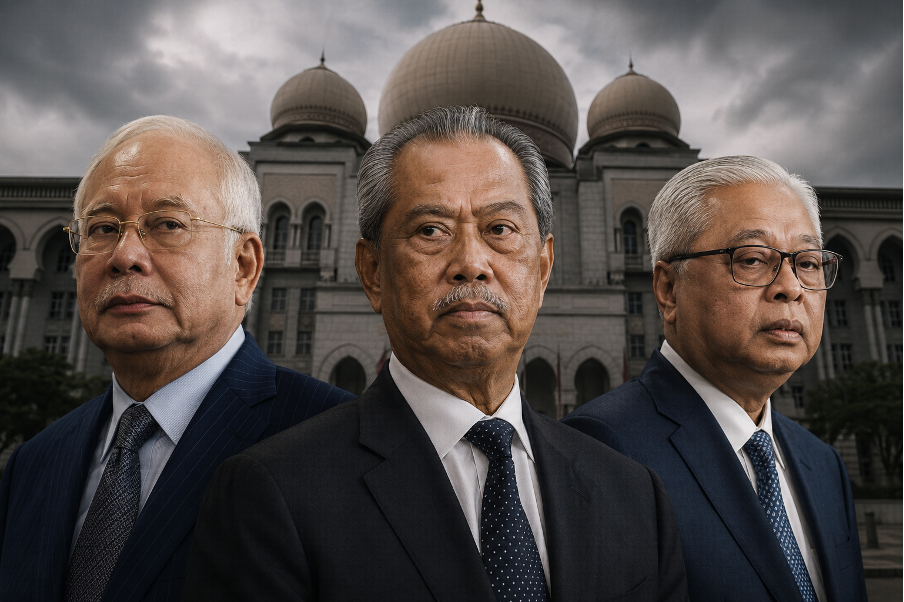
[2] We should feel the shame of it. A day of infamy. But shame is not enough. We must stop, take stock, and face a difficult truth: corruption has long ceased to be an aberration; it is a culture that has engulfed the nation and reaches to the very summit of power.
[3] We did not arrive here by accident; it is the result of institutional and personal failures. Too many who held power at different levels failed to do their duty — or quietly profited while the rot spread. All too many were appallingly dishonest and horribly corrupt. None in the cabinet had the courage or the moral conviction to demand accountability; they either kept their silence or publicly defended corrupt leaders for the sake of political or personal expediency. Silence, in the face of criminality and abuse of power, is not neutrality. It is complicity.
[4] When it became clear that something was badly amiss at Tabung Haji — the sacred savings of ordinary pilgrims — many of the same voices did not demand accountability. They reached instead for their oldest weapon, recasting legitimate scrutiny as an attack on Malay-Muslims, an attempt to shame the community. It is a squalid manoeuvre, used again and again: whenever the powerful are cornered, race and religion are summoned to shield them.
[5] That is why this moment carries a weight beyond the courtroom. Many whose hands are soiled with corruption, and who have shown not a shred of integrity, are now manoeuvring for a return to power. Once again they wrap themselves in the cloak of race and religion, as though piety and ethnic loyalty could launder a record of plunder.
[6] This must be a defining moment — the point at which we finally say: enough. Enough of corrupt, dishonourable and failed figures. Enough of the racial and religious theatre deployed to distract from the looting. Enough of rewarding, election after election, the very people who betrayed our trust.
[7] Three former prime ministers stood in the dock that day. Let that image not merely embarrass us; let it instruct us. The courts will deal with the guilt of individuals — but only the voters can deliver the larger verdict. And that verdict comes down to a single, stark choice: do we gamble on something new and untested, or return once more to the same tainted parties?
[8] It is heartening to see Pakatan Harapan find its wings again, pursuing those once thought untouchable with a resolve many had despaired of ever seeing. Yet in almost the same breath it speaks of working with other parties, of alliances and accommodations still to be struck. And there lies the danger: that the old reflex of compromise reasserts itself, and principle is once again traded away for the arithmetic of power.
[9] Many feel we need a fresh start, a clean break from the past. It’s foolish to expect political parties with a history of corruption, compromise and identity politics to deliver anything different. It might well come down to a choice between experienced but corrupt and compromised parties and fresh but untested ones.
[10] Inexperience is a curable failing; entrenched corruption is not. As Zohran Mamdani told the disgraced former New York governor Andrew Cuomo: “What I don’t have in experience I make up for in integrity. And what you don’t have in integrity you can never make up for in experience.” A nation gets the leaders it is willing to tolerate. It is time we tolerated far less — and demanded far more.
Dennis Ignatius | Kuala Lumpur | 28 August 2026


You must be logged in to post a comment.