
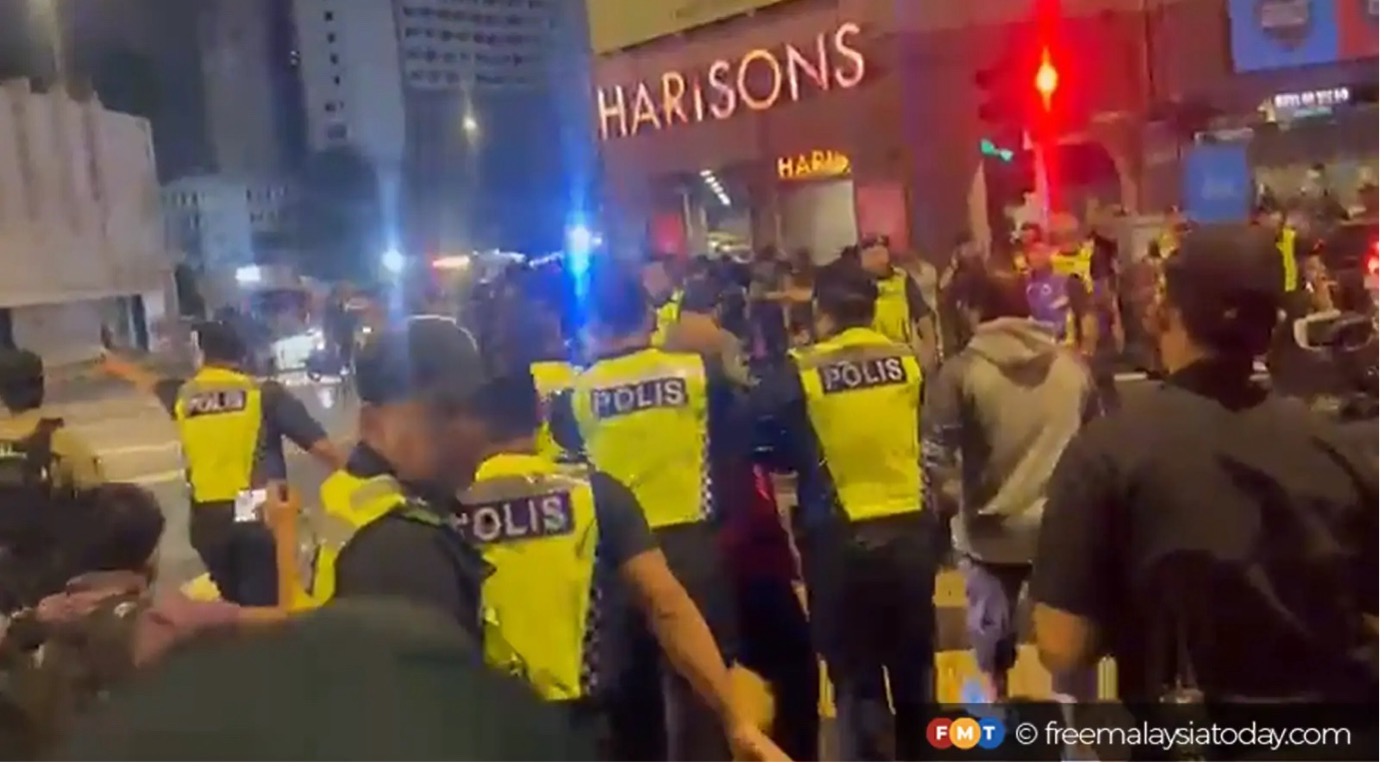
[1] The peaceful assembly planned over the weekend to protest so-called “illegal” temples – undocumented houses of worship, many built decades ago on state or private land – was swiftly met with calls for it to be banned. Notably, even figures who had built their political careers on defending the right to peaceful assembly opposed the rally, arguing that it was deliberately provocative and aimed squarely at the Hindu faith.
[2] Those concerns were not unfounded. Zamri Vinoth, the principal organiser of the protest, has a long and troubling record of religious provocation, marked by repeated attempts to bait and antagonise Hindus. His recent actions suggest a deliberate effort to exploit the temple issue to inflame anti-Hindu sentiment.
[3] It was against this backdrop that the prime minister urged the police to act against the demonstrators, declaring that they should be “arrested and thrown out.” He warned against exploiting sensitive issues involving places of worship to inflame racial tensions and stressed that national harmony and security must be protected at all costs. Many welcomed what they perceived as a firm and decisive intervention.
[4] Finding the proper balance between safeguarding peaceful assembly and free expression on the one hand, and preventing violence and communal discord on the other, is always challenging. Yet if peaceful assembly is permitted only for causes deemed acceptable or views considered inoffensive, we step onto a slippery slope. Such selectivity erodes constitutional protections and strengthens a state that has yet to demonstrate a consistent commitment to the liberties it is meant to uphold. We should be wary of sacrificing fundamental freedoms for the fleeting satisfaction of silencing voices we rightly reject.
[5] The present crisis over so-called “illegal” temples did not arise in a vacuum. It is the cumulative result of years of political neglect and a failure of leadership to confront sensitive issues of race and religion with honesty, fairness, and resolve.
[6] Zamri himself illustrates this institutional failure. Hundreds of police reports have reportedly been lodged against him for remarks that appear to cross the legal limits of free speech, yet no action has been taken against him. The authorities move swiftly when the majority religion is disparaged, but far less decisively when other faiths are targeted. The result is near impunity for Zamri and others like him – an injustice that exposes the discriminatory double standards embedded in our system of governance. Such selectivity breeds resentment and distrust, and without trust, the resolution of sensitive issues becomes all the more difficult.
[7] Nor has the prime minister consistently set the right tone in dealing with matters of race and religion. He lectures the world on the importance of respect and tolerance of diversity, but too often falls short of those ideals at home. His handling of the century-old temple dispute in the Masjid India area of Kuala Lumpur, for example, left many Malaysian Indians hurt and disappointed. With greater foresight, restraint, and sensitivity – and less political grandstanding – the episode might have served as a constructive template for resolving similar disputes.
[8] Instead of pursuing an equitable and respectful solution to a long-standing problem, the prime minister has further heightened tensions with his harsh and callous insistence that all so-called “illegal” temples be summarily demolished. “I do not allow houses of worship that do not abide by the rules, and local councils have been given the authority to clear out areas not owned by such temples so that this issue can be resolved properly,” he was quoted as saying. As Zaid Malek of Lawyers for Liberty has warned, such a directive is dangerous and irresponsible, potentially opening the door to indiscriminate demolitions, particularly of Hindu temples.
[9] By effectively validating Zamri’s campaign, the prime minister has signalled what amounts to an open season on temples across the country. His failure to distinguish clearly between recently erected illegal structures and temples that have stood for generations – products of Malaysia’s layered history and plural society – places even long-established places of worship under a cloud of uncertainty.
[10] In doing so, the prime minister has broken faith with the Malaysian Indian community and plunged it into one of the gravest crises it has faced since independence. He has made his political calculation; Malaysian Indians must now make theirs. Whatever course they choose, one thing is clear: the real danger facing minorities in this country lies not in the theatrics of a single provocateur, but in the decisions and judgment of those entrusted with power.
[Dennis Ignatius | Kuala Lumpur | 11 February 2026]
 Dennis Ignatius
You must be logged in to post a comment.