
Tags
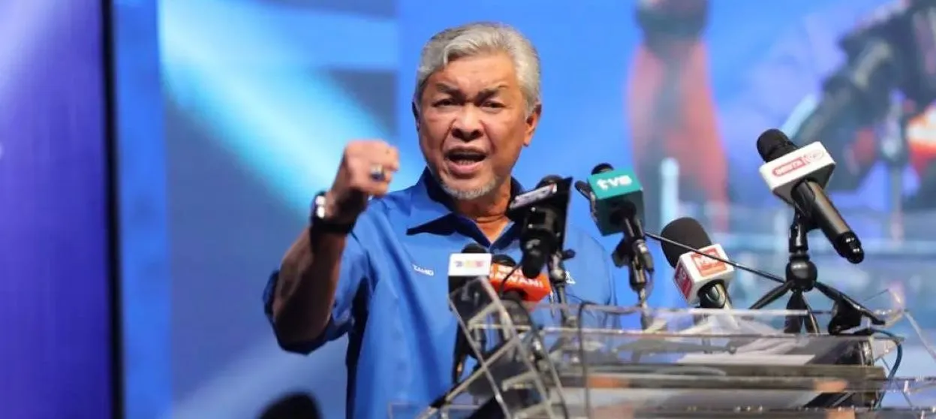
[1] In a recent speech, UMNO president Ahmad Zahid Hamidi conceded that the party is still far from recovery after the heavy drubbing it suffered in GE15. He warned that unless UMNO changes – unless it undertakes what he described as an “extraordinary” and “unprecedented transformation” – the party will continue to struggle to regain the broad support it once commanded.
[2] Zahid is absolutely right on one point: without profound change, UMNO has no realistic path back to power. What is deeply disappointing, however, is the complete absence of genuine introspection, soul-searching, or any honest reckoning with the reasons why the party was so decisively rejected by the people.
[3] Instead of confronting the realities behind UMNO’s collapse, Zahid chose to gloss over uncomfortable truths and reduce the problem to a matter of perception. The problem, it seems, was not UMNO’s conduct, but the public’s “suspicion and prejudice.” Voters, in this telling, were misled. What UMNO needs, therefore, is not reform but rebranding – better messaging, smarter marketing, and a more polished sales pitch.
[4] No need, then, for moral reckoning. No need to confront institutional decay, abuse of power, or leadership failure. Just clever marketing and a generous coat of whitewash. To dress it all up, Zahid invoked lofty phrases like “intellectual values,” “spiritual strength,” and “leadership quality” – qualities conspicuously absent from UMNO’s political culture for many years.
[5] Most striking was the silence on the largest elephant in the room: corruption. UMNO did not merely stumble; it was brought down by the scale and brazenness of corruption at the very top over many years. This was not the failure of one man alone. While Najib Razak became the symbol of that rot, much of the UMNO leadership was similarly tainted. Zahid himself faced dozens of criminal charges related to corruption and abuse of power until prime minister Anwar Ibrahim made it all go away. Corruption ran so deep in UMNO that few have the credibility to even talk about it without coming across as hypocrites.
[6] What this episode reveals is that UMNO still cannot bring itself to accept the real cause of its downfall. The party, for example, continues to cling to Najib and agitate for a full pardon, even though it was Najib’s scandalous conduct that finally pushed UMNO over the edge. That refusal to break decisively with the past speaks volumes.
[7] Equally troubling is UMNO’s continued reliance on the old, tired formula of race and religion to shore up Malay support. Participation in the Unity Government alongside the Democratic Action Party has merely forced UMNO to be more subtle – outsourcing racial rhetoric to UMNO Youth while maintaining a working relationship with DAP leaders to remain in power.
[8] This was a missed opportunity. With wiser and more imaginative leadership, UMNO could have charted a genuinely new course – one grounded in sound policies and inclusive politics capable of meeting the expectations of a majority of Malaysians. That would have required pioneering a mature, respectful political partnership with the DAP, which – like it or not – now represents the ethnic Chinese electorate. They should know enough to know that Malaysia’s long-term stability and progress depend on a durable framework of Malay–Chinese political cooperation. Nothing else has ever worked.
[9] Just as crucial is generational renewal. UMNO cannot hope to reconnect with younger voters while being led by figures burdened with scandal and political baggage. So long as leaders like Zahid cling to power, meaningful renewal will remain difficult. A clean break, with younger and more credible leaders, would instantly re-energise the party and restore its relevance.
[10] Despite its electoral decline, UMNO remains one of the few parties capable of commanding the loyalty of a large segment of the Malay electorate. If it could truly reform – if it could abandon corruption, reject racial politics, embrace principled cooperation, and renew its leadership – it could yet play a decisive and constructive role in shaping Malaysia’s future.
[11] But while Zahid may be right about the need for change, he is plainly the wrong man to deliver it. For that, Malaysia may have to wait for a new generation to finally arise.
[Dennis Ignatius | Kuala Lumpur | 06 February 2026]
 Dennis Ignatius
You must be logged in to post a comment.