[1] What is rarely remembered today is just how much Britain profited from its Malayan colony. Such was its importance that Malaya earned the sobriquet “the Dollar Arsenal”, at one point contributing an astonishing 70 per cent of the British Empire’s total foreign exchange earnings. Revenue from Malaya helped Britain service its war debt to the United States and finance its recovery from the devastation of the Second World War.
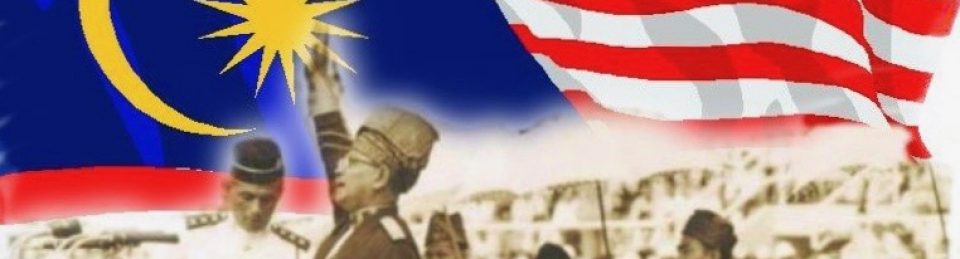
[2] Put plainly, Malaya helped underwrite Britain’s war effort and pay for its post-war reconstruction. Yet despite all the lofty rhetoric about the “white man’s burden”, the real burden fell not on the white man but on the conquered peoples of Asia, Africa and Latin America. Imperial prosperity was built on the systematic extraction of colonial resources.
[3] In the nineteenth century, this plunder was cloaked in the language of civilisation and salvation. Empire was presented as a noble mission to uplift backward peoples and bring progress to the heathen. In reality, it was never about benevolence; it was about the organised transfer of wealth from weaker, overwhelmingly non-white societies to powerful imperial states.
[4] Little has changed. Then it was a mission to civilise; today it is national security, terrorism, narcotics or humanitarian intervention. The vocabulary has evolved, but the underlying objective remains the same: to control resources, dominate weaker states and enforce imperial interests. President Donald Trump’s actions in Venezuela illustrate this continuity with brutal clarity.
[5] To be sure, Washington frames its intervention in the language of democracy promotion and counter-narcotics enforcement. Venezuela’s political repression, corruption and economic collapse are real and indefensible. But internal failure does not license external conquest. History shows that imperial powers routinely exploit domestic dysfunction as a pretext for intervention — not to resolve it, but to capitalise on it.
[6] America’s assault on Venezuela is best understood in this tradition. It is a prelude to plunder, cynically packaged as a war on narcotrafficking. As Trump and senior officials have made clear, the overriding objective is control over Venezuela’s oil and mineral wealth, under the delusional belief that the Western Hemisphere are theirs to dominate. This is imperialism without apology; ‘America First’ at its most predatory.
[7] Such behaviour represents one of the most serious assaults yet on the principles underpinning the post-war international order: self-determination, respect for national sovereignty, non-interference and the prohibition on the use of force. Trump has not merely bent these rules; he has discarded them, turning the clock back to an age when conquest was an accepted instrument of policy.
[8] Trump’s treatment of Venezuela’s democratic opposition should serve as a warning to freedom movements everywhere. Leaders he once supported to undermine Nicolás Maduro were quickly discarded when they ceased to be useful. Trump is not interested in building democratic institutions; he is interested in pliable clients. He would rather deal with a weakened remnant of the Maduro regime than risk empowering independent leaders who might resist American domination.
[9] Nor is Venezuela merely a regional target. The assault is also aimed squarely at China. Venezuelan crude accounts for roughly five per cent of China’s total oil imports. Cutting off this flow is part of Washington’s broader effort to constrain China’s economic rise.
[10] History offers a sobering parallel. Ensuring energy security was a central driver of imperial Japan’s expansion and aggression in the early twentieth century. Growing American efforts to deny China fair commercial access to vital resources will inevitably be viewed with alarm in Beijing. Already, Washington’s move to corral Malaysia’s mineral resources through a recently concluded trade agreement has generated unease in Chinese policy circles.
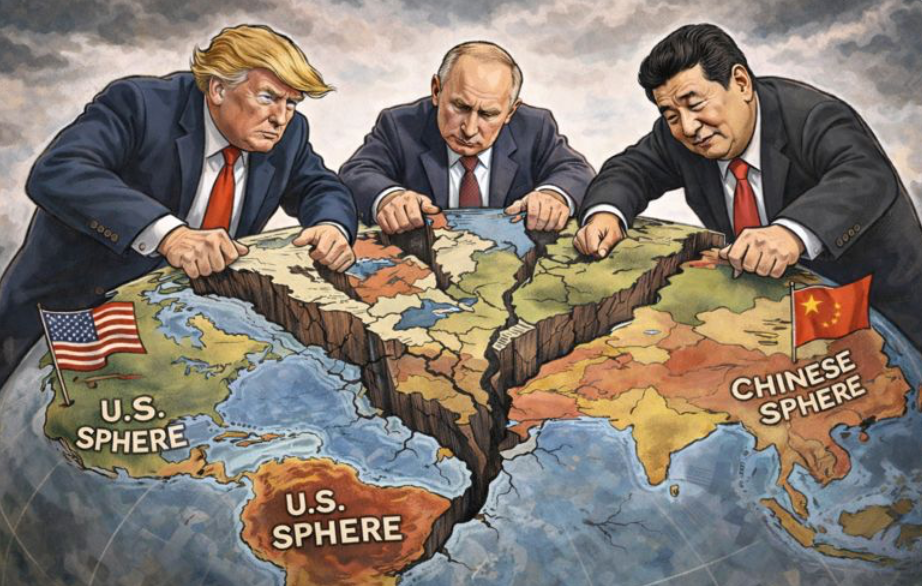
[11] Beyond Venezuela, the precedent itself is profoundly destabilising. If the United States can claim South America as its exclusive sphere of influence, why should China not assert a similar right over the South China Sea and Southeast Asia to secure its own strategic interests? If America can invade a sovereign nation and seize its assets as a matter of right, why should China feel compelled to exercise restraint over Taiwan – which most states formally recognise as part of China?
[12] For this reason, Prime Minister Anwar Ibrahim deserves credit for taking a firm and unequivocal stand against the US attack on Venezuela. Such a position is not without cost, but any nation that claims to uphold international law and the UN Charter can do no less.
[14] Europe and several Asian and Arab states, by contrast, have responded with limp statements calling “on both sides to exercise restraint”. That is not balance; it is moral abdication. European capitals were quick to condemn Russia’s invasion of Ukraine yet remain conspicuously timid in the face of American aggression. This inconsistency reflects not principle but dependency – a willingness to trade credibility for convenience.
[15] Asia has seen this logic before. It knows where empire leads. If the rules collapse in Venezuela today, they will not hold in Southeast Asia tomorrow.
[Dennis Ignatius |Kuala Lumpur | 5th January 2026]
 Dennis Ignatius
You must be logged in to post a comment.