
Tags
Malaysia, Malaysia-US relations, Malaysia-US trade agreement, President Trump, tariffs, unequal treaty
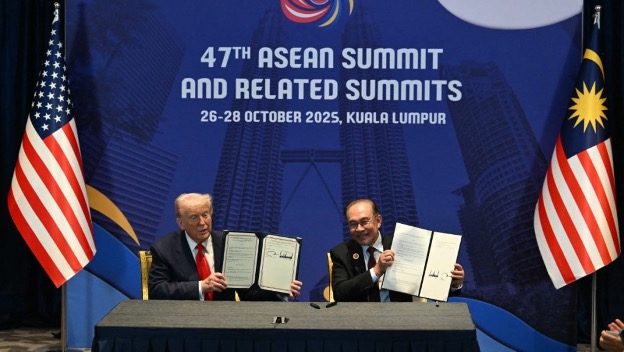
[1] US ambassador Edgard Kagan warned last week that while Malaysia was free to explore opportunities with the BRICs grouping, President Trump “has been very clear about what some red lines are and the potential consequences that would come from crossing those.” It was an astonishing statement made all the more stunning by the fact that the Putrajaya didn’t deny it or rebuke the ambassador.
[2] It is the most telling indication thus far of how Washington views the recently concluded Malaysia-US Trade Agreement. While Malaysian officials continue to deny that our national interests have been compromised, Washington clearly feels it now has the upper hand in its dealings with Malaysia. One has only to read the agreement in its entirety to understand why.
[3] In the first place, to call it a “reciprocal” trade agreement is a stretch; it is actually a long list of demands by the US. The words “Malaysia shall…” appears no less than 60 times in the agreement. By contrast, apart from some tariff relief in sectors that essentially benefit the US economy, US obligations are minimal. Crucially, the agreement makes clear that higher tariffs could be reimposed at any time should Putrajaya prove recalcitrant. How anyone can consider this a “good deal” is baffling.
[4] Taken in its entirety, the agreement gnaws away at our sovereignty in so many ways and undermines our ability to act in our own national interests. It obliges us, for example, to relinquish to the US government our right to regulate certain imports, set quotas and determine safety and phytosanitary standards relating to American agricultural, pharmaceutical and other products. It even restricts our right to enter into agreements with other countries if it disadvantages US exports.
[5] Other clauses dictate how we ought to deal with migrant workers, labour rights, protect the environment and manage our forests and fisheries. And all this at a time when Washington itself is harshly treating its own migrant workers, loosening environmental requirements and reducing regulatory oversight of American corporations. Granted some of these issues need to be better managed but why should it be subject to American oversight?
[6] Equally disconcerting, the agreement obliges Malaysia to prioritise Washington’s economic and national security interests in our dealings with other nations. Washington will now have a say in all bilateral trade and digital trade agreements, the purchase of nuclear technology and defence procurement in addition to unrestricted access to our rare earths sector. It also obliges Malaysia to mirror US sanctions against other nations. The government says it is only required to consult but that is not how it is worded in the agreement.
[7] And then there’s all those procurement and investment demands contained in the agreement – USD150 billion worth of American products, USD7 billion in investments in the US economy annually. This is government-to-government extortion; the wealthiest country in the world extorting money from a developing country. The government argues that these targets are all aspirational, that actual investments and procurement will be commercially driven, but try telling that to President Trump.
[8] The government’s approach seems to be to sign first to gain immediate relief from some tariffs and argue about the details later. At the same time, Putrajaya is insisting that the agreement does not compromise our sovereignty, that we can walk away from anything we don’t like. But if the government felt compelled to concede so much for so little this time around, how will it respond if Washington threatens to reimpose tariffs again should Malaysia fail to comply? Yet more concessions?
[9] Washington’s objective seems clear enough: use the threat of tariffs not just to obtain outrageous preferential treatment for American companies but to force Malaysia to “increase its alignment” with Washington in political, economic and national security matters. They have turned a trade agreement into an instrument of coercion and control. Putrajaya’s decision to engage Trump over tariffs is perfectly understandable; its capitulation to Washington is not.
[10] By caving in to US pressure, Putrajaya has effectively upended half a century of Malaysia’s non-align foreign policy and undermined decades of Malaysian bilateral and regional diplomacy. Beijing will almost certainly be concerned by how much Malaysia has conceded to the US, especially as several provisions of the agreement target China. It will stiffen Beijing’s resolve to defend its interests in the region – Sino-US rivalry will intensify, tensions in the South China Sea will rise and instability will increase. It’s not an outcome that anyone could have anticipated when Malaysia took over as ASEAN chairman.
[11] Malaysians have always valued good relations with the United States, but this outrageous agreement takes us in a direction that is entirely unacceptable. Our only hope now is that the US Supreme Court will rescue us from this humiliating “unequal treaty” by declaring Trump’s tariffs unconstitutional.
[Dennis Ignatius | Kuala Lumpur | 10 November 2025]
 Dennis Ignatius
You must be logged in to post a comment.