

[1] The battle over the much-despised Urban Renewal Act (URA) is far from over. In the face of both strong public resistance and bipartisan political opposition, the government temporarily withdrew the bill promising to review it. The amendments that are being considered, however, are merely cosmetic in nature; it does nothing to assuage the concerns of homeowners.
[2] The fear is real. All over the nation residents’ associations and civil society groups are fighting to save their homes and their neighbourhoods from rapacious developers and their political backers.
[3] What is going on in Kg Sungai Baru at this very moment should give us pause for concern. Homeowners are being forced out. Those who are resisting the forced takeover of their land are dismissed as outside agitators or told to negotiate with the developer. The government has washed its hands off the whole matter.[1] Is this a harbinger of things to come?
[4] Instead of sitting down with concerned residents, the government has resorted to subterfuge. The government says, for example, that no one will be forced to sell[2]when the whole purpose of the bill is to force recalcitrant homeowners to sell once an arbitrary threshold is reached. Make no mistake; those who don’t agree are going to be forced out one way or another. If it can happen in Kg Sungai Baru, it can happen anywhere.
[5] The minister says that the average lifespan of high-rise apartments in Malaysia is estimated to be 60 to 80 years, although this can be extended with regular maintenance and refurbishment.[3] Why then is he insisting that even buildings half that age be targeted for redevelopment?
[6] The minister claims that his ministry has engaged in the most extensive consultations in its history; but if it was all so positive, why has this bill generated the most extensive opposition in the ministry’s history as well? In the absence of greater transparency and accountability, residents are right to conclude that it’s nothing more than a charade. And now, DBKL wants to further limit even the minimal consultations that it engages in.[4]
[7] We know from experience too, that all those big promises the government routinely makes about revitalizing our neighbourhoods and improving our living spaces are just empty rhetoric. What we see happening is the gradual loss of green spaces to developers and cronies, overdevelopment, and the destruction of once-tranquil neighbourhoods. Simply put, our politicians no longer have the credibility to make such promises.
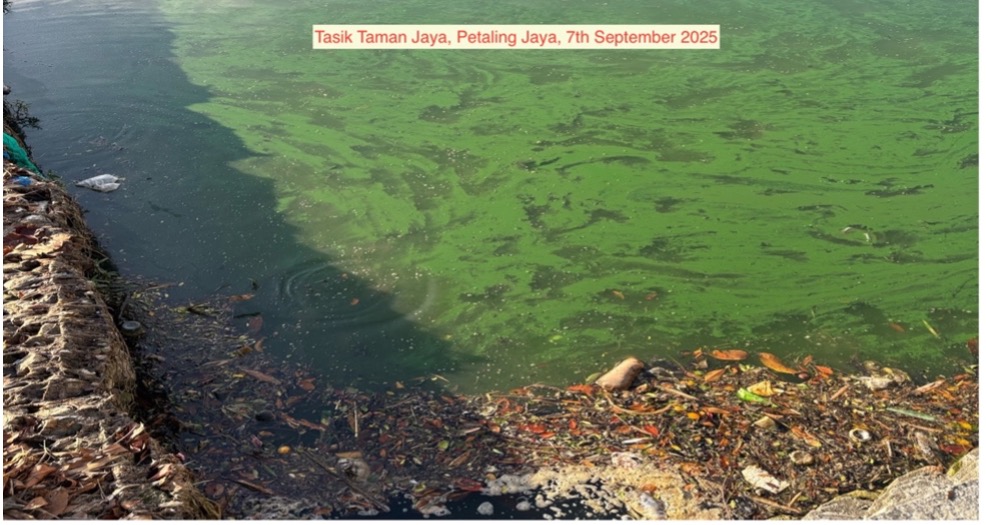
[8] And Just look the ecological disaster that is Tasik Taman Jaya – now a putrid, toxic brew of chemical waste, garbage and plastic refuse. The stench around the lake is so bad that people must literally hold their noses as they walk by. If the authorities cannot be trusted to even maintain an iconic lake in the heart of Petaling Jaya, how can they convince us that they are up to the challenge of redeveloping our neighbourhoods?
[9] The government references similar laws in Australia and Singapore to justify URA but it forgets that in those countries the whole process is transparent and free of corruption. In Malaysia, on the other hand, corruption and the abuse of power at all levels of government is both systemic and rampant. Politicians are often the worst culprits. Agencies like DBKL are no better; just look at the number of DBKL officials at all levels who have been arrested by the MACC. Without stronger safeguards and greater transparency, a redevelopment agenda involving 534 potential areas – our homes, our neighbourhoods – with an estimated gross development value of RM355.3 billion[5] would quickly evolve into the mother of all corruption scandals. And it is homeowners who will pay the price.
[10] If redevelopment or renewal become necessary, homeowners – not the government or developers – should drive the whole process. The government should set a minimum threshold of 90% and then allow homeowners to collectively negotiate directly with all interested developers to obtain the best possible deal for themselves. This is a more democratic arrangement, one that would also protect the rights of homeowners.
[11] In its present form, the bill could well lead to an unprecedented takeover of private property under the guise of redevelopment and renewal. Though the immediate victims will be the urban poor whose aging properties now happen to sit on prime land, the bill will affect us all one way or another. The only winners will be property developers and their political backers. Protecting our homes from government overreach and powerful property developers is now the epic struggle of our times!
[Dennis Ignatius | Kuala Lumpur | 17 Sept 2025]
[1] Govt seized land in 2021, not developer, Surendran pans Zaliha |Malaysiakini |13 Sept 2025
[2] Urban Renewal Bill won’t lead to forced evictions, says Anwar | NST |25 Feb 2025
[3] Redevelopment A Necessity For Ageing Buildings | Star Property | 11 April 2025
[4] Combined threat for KL residents |The Star |2 September 2025
[5] Controversy over Malaysia’s proposed Urban Renewal Act: PM Anwar says Malay land rights won’t be affected |CAN |28 Feb 2025
 Dennis Ignatius
You must be logged in to post a comment.