
Tags
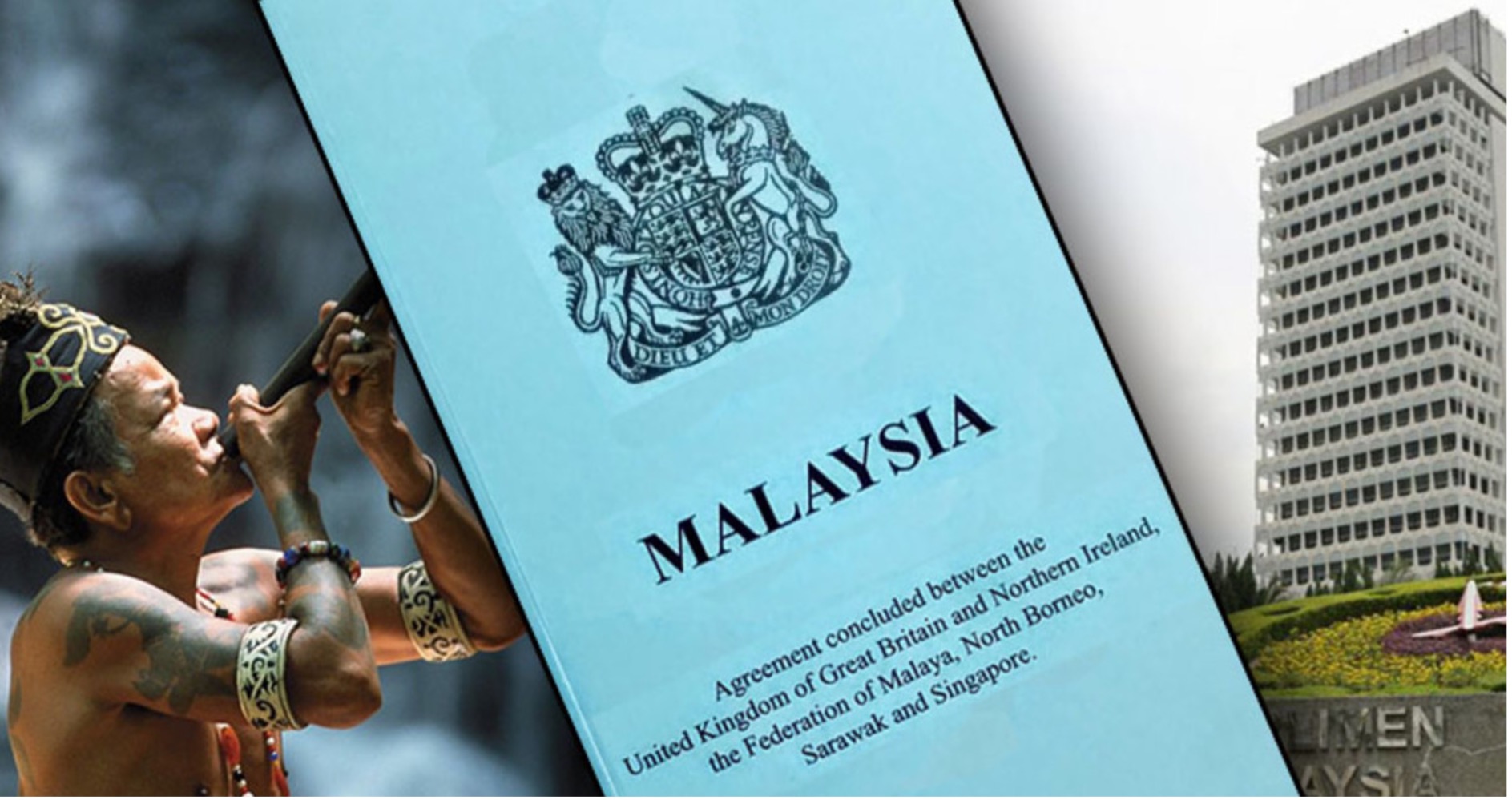
[1] The Borneo states are now pressing hard for their full rights under MA63. It’s not just about revenue and the right to run their internal affairs but about having a meaningful say in the political direction of the nation. Sabah and Sarawak are – and this cannot be stressed enough – co-equal partners with Malaya under the terms of the Malaysia agreement (MA63).
[2] One of their key demands is to be allocated 35% of the seats in Dewan Rakyat. When Malaysia was formed in 1963, Malaya was allocated 105 of the 160 seats in the Dewan Rakyat (representing 65% of the voting power in the House), with Sarawak holding 24 seats, Sabah, 16, and Singapore, 15. This denied Malaya the two-thirds majority required to amend the Federal Constitution. When Singapore left, it’s 15 seats were not redistributed to Sabah and Sarawak, causing the two East Malaysian states to lose their veto power.[1]
[3] Currently, the Dewan Rakyat comprises 222 members, with Sabah and Sarawak allocated 25 and 31 seats respectively, for a combined 25.2% share of voting power. This allows 148 of the 166 MPs from Malaya to push through constitutional amendments.[2]
[4] While it may seem like just another spat between the two Borneo states and the Federal Government, much more is at stake. The key question that Malaysians must ask themselves when considering this issue is whether Putrajaya can be trusted to act in the best interests of all Malaysians regardless of race, religion or region and whether there is a need for a better system of checks and balances?
[5] Over the last few decades, Putrajaya has eroded many of the understandings implicit in the Federal Constitution. Ketuanan Melayu politicians have gradually changed the very character of Malaysia from a secular democracy into an ethno-religious state and are set to take Malaysia further down that road. There are no checks and balances to prevent them from making major constitutional amendments that could spell the end of the Malaysia we know. Even the basic structure doctrine of the Federal Constitution is now being challenged.
[6] Both Sabah and Sarawak have demonstrated that they are the true inheritors of Tunku Abdul Rahman’s vision of a diverse and multicultural nation where all are respected, valued and enjoy a fair share of the fruits of citizenship. In Malaya, that dream is now all but dead, butchered by race-based nationalists intent on imposing their narrow-minded and bigoted vision upon the nation. It is imperative, therefore, that the Borneo states be further empowered rather than sidelined.
[7] There is of course no shortage of detractors. Though the prime minister is apparently open to the idea (if only to secure his parliamentary majority), you can be sure that UMNO and PAS will fight it tooth and nail; they know full well that it would significantly curtail their power and access to the wealth of Borneo not to mention their hegemonic ambitions.
[8] Others have argued that it would cause “major electoral distortions that could undermine the country’s representative democracy [and] distort the value of votes [between East and West Malaysia].”[3] While that may be so, it ignores the fact that the formation of Malaysia was premised upon an agreement (MA63) between four co-equal partners. Sabah and Sarawak (and Singapore) did not become part of Malaya but co-equal partners in a new enterprise called Malaysia.
[9] This means that no party to the agreement should have the right to impose their will on the others. Returning to Sabah and Sarawak a 35% share of the seats in the Dewan Rakyat is the best way to ensure this, notwithstanding any electoral distortions that may ensue. The other option – 35% of the seats in the Dewan Negara – is a non-starter given that real power rests with the lower house.
[10] Ensuring that the Borneo states have veto power over constitutional amendments that may go against the spirit of MA63 is now the last hope we have of maintaining what’s left of the secular democratic nation that came into being in 1963. It is by no means the perfect answer but it’s the best that’s available to us.
[Dennis Ignatius |Kuala Lumpur |6 October 2024]
[1] Sabah, Sarawak’s one-third seat demand non-negotiable, say don, activist | FMT | 04 Oct 2024
[2] ibid
[3] 35% Dewan Rakyat seat allocation for Sabah, Sarawak would cause ‘major electoral distortions’, NGO warns |The Edge Malaysia | 4 Oct 2024
 Dennis Ignatius
You must be logged in to post a comment.